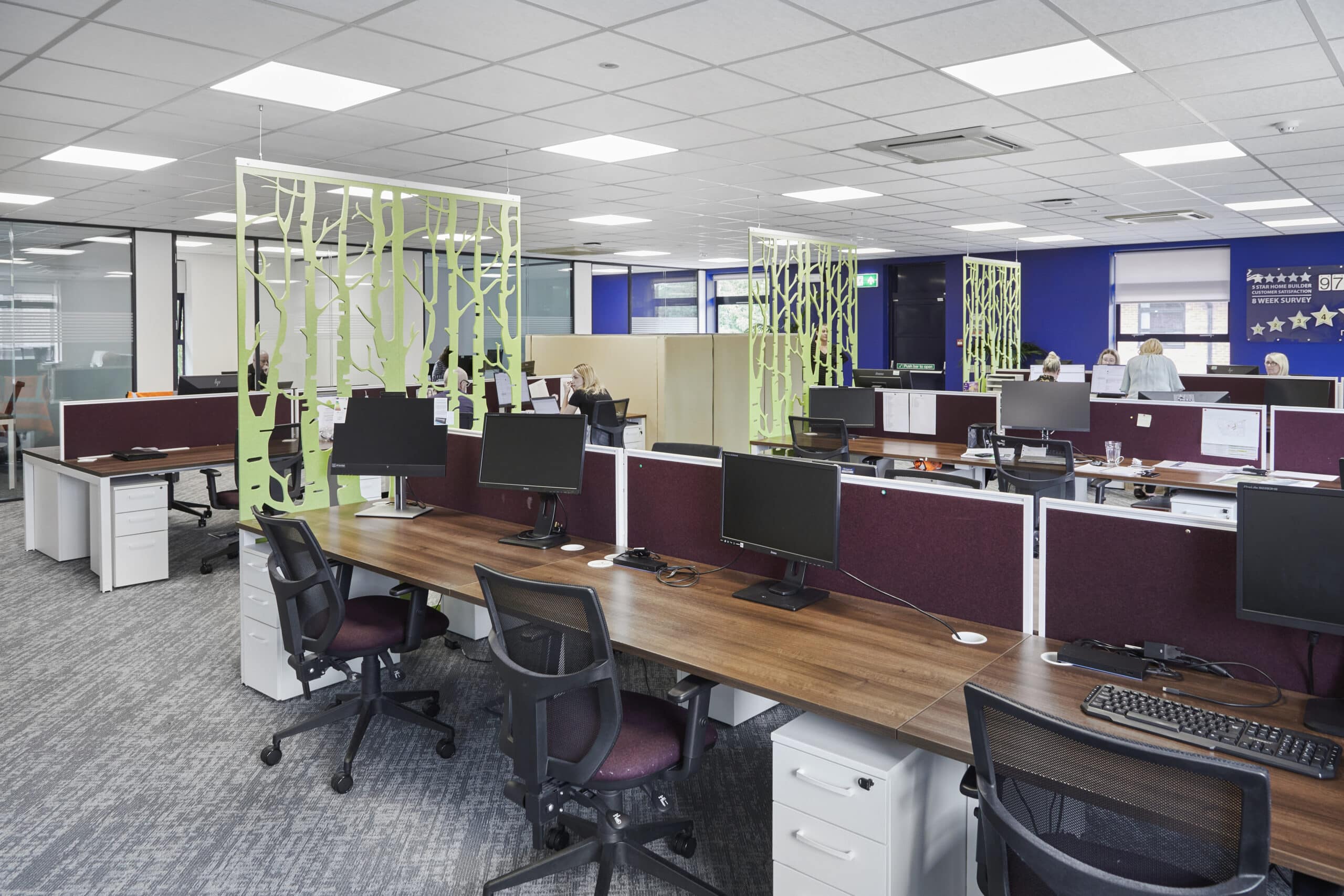
Workplace branding is not an applied layer. It is built into how the workspace functions.
It shows up in how teams use the environment, how the space supports communication, and whether the workplace reflects the pace, structure, and personality of the business. Visual identity still matters, but it only works when the space already feels aligned operationally.
This is where a structured consultation helps define what the brand needs to achieve within the space before design decisions are made.
Layout has a direct impact on how a business feels to both employees and visitors.
A workspace with clear collaboration areas, focused work zones and well-positioned meeting spaces creates a very different impression from one that feels fragmented or unclear. The office layout says a lot about how the organisation works, whether that is open and collaborative, structured and process-driven, or somewhere in between.
This is why workplace branding in office design starts with layout and behaviour, not decoration. A considered approach to office design ensures the environment supports both brand identity and day-to-day operations.

The strongest branded workspaces feel consistent because the space supports the right behaviours.
That might mean creating better team settings, giving managers space for private conversations, or improving how different departments connect. When the environment supports how people actually work, the brand becomes tangible in a practical way.
Furniture, colour and graphics still play a role, but they should reinforce what the space is already doing well rather than carry the whole idea on their own. A consistent approach to office furniture and workspace planning helps turn branding into something people experience every day.
Workplace branding only works when it reflects the organisation’s real culture.
If the design suggests one thing but the business operates another way, the gap is obvious. Employees do not connect with the space and visitors leave with a mixed impression.
Alignment between workplace branding and company culture creates consistency. The workspace should reflect how the business communicates, collaborates and makes decisions, rather than trying to present a version of the company that does not exist in practice.

The most common mistake is focusing on how the office looks before defining how it needs to work.
Other problems include:
When that happens, branding feels disconnected from the real experience of the workplace.
Workplace branding is part of the wider delivery of a workspace, not a separate exercise.
Whether through an office fit out or an office refurbishment, branding decisions need to sit alongside layout, planning and delivery. A joined-up approach ensures the finished environment reflects both the business identity and the way the workspace needs to perform.

Workplace branding is not defined by graphics alone. It is defined by whether the space feels consistent with the business operating inside it.
When layout, employee experience and everyday functionality are aligned with brand identity and culture, the result is a workspace that feels clear, credible and easy to use.
If you are looking to align your workspace with your brand, get in touch to start the conversation.